
How to Stop Foamy Draft Beer: The Bar Owner's Guide to Saving $123.50 Per Keg
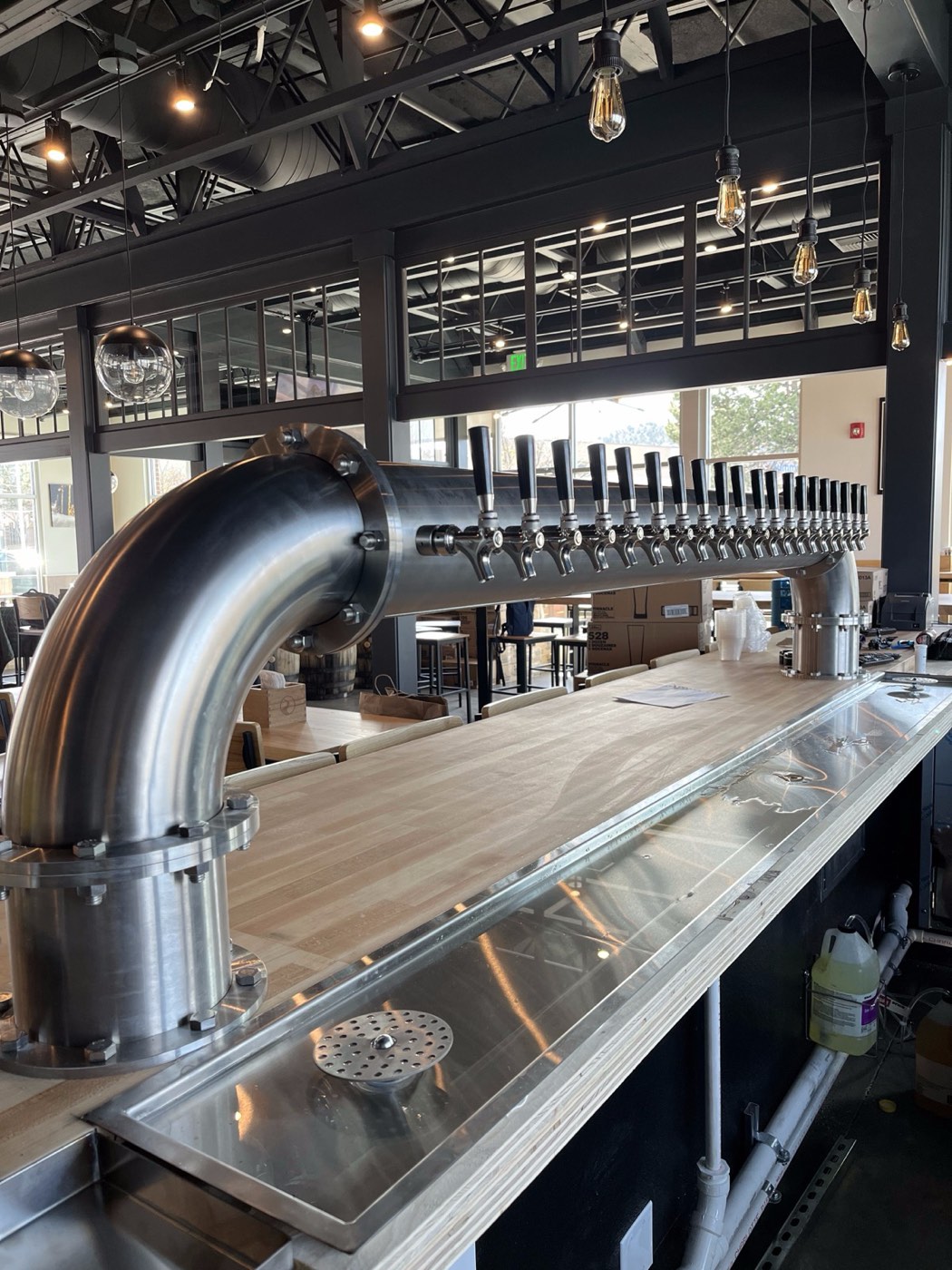
Quick answer: To stop foamy draft beer, fix the three things causing it: beer temperature out of range (keep beer at 36–38°F from keg to faucet), CO2 pressure out of balance (12–14 psi straight CO2 for direct-draw; blended gas pressure varies with the specific blend, line length, and elevation for long-draw), and dirty beer lines (clean every 14 days with 2% caustic and a recirculating pump per Brewers Association standard). Get all three right and foam disappears.
Every foamy pour is money down the drain. Literally.
If you're running a bar in Bend, a brewpub in Redmond, or a restaurant anywhere in Central Oregon, and your bartenders are dumping the first half-pint to "get a clean pour" — you're losing $123.50 per keg in incremental profit you should be putting in the bank. At just 10 kegs a week, that's $64,220 in a single year — and $192,660 over three years — left on the floor. Every foamy beer is a customer waiting longer, a bartender working harder, and a profit margin getting thinner.
Foamy draft beer isn't bad luck. It isn't a temperamental keg. It isn't the brewery's fault. It's almost always one of three things — and every one of them is fixable.
Here's how to stop foamy draft beer for good.
What Foamy Draft Beer Actually Means
Foam happens when CO2 comes out of solution before the beer hits the glass. The beer was carbonated correctly when it left the brewery — every Brewers Association member tests for it. So if it's foaming at your faucet, something in your system is forcing the CO2 out of the beer between the keg and the tap.
That "something" is almost always one of The Big 3:
- Temperature — beer too warm somewhere in the line
- Pressure — gas mix or psi out of balance with line length and elevation
- Cleanliness — biofilm, beerstone, or worn parts breaking surface tension
Get those three right and foam disappears. Get them wrong and no amount of "pour technique" training will save you.
Let's break each one down.
Cause #1: Beer Temperature Out of Range
The Brewers Association standard is clear: beer should be kept at 36–38°F from the walk-in all the way to the faucet. Every degree above that range increases foaming exponentially. CO2 wants to escape warm beer.
Most foamy systems we see in Central Oregon have a temperature problem hiding somewhere in the line. The walk-in might read 38°F at the door, but if the trunk line runs through a warm wall or the glycol bath isn't holding 29–32°F, beer warms up before it ever reaches the tap. By the time it hits the faucet, CO2 is already breaking out of solution.
What to check today: - Walk-in cooler temp: should hold 36–38°F at the keg, not just at the door sensor - Glycol bath temp (long-draw systems): 29–32°F, no warmer - Beer temp at the faucet: pour into a chilled pint glass, take a thermometer reading — target 36–38°F - Insulation along the trunk line run: any cold spots or warm spots?
In Bend, our 3,600-foot elevation and dry climate make temperature management even more critical. We've walked into bars where the walk-in reads 38°F at the door but the keg in the back corner is sitting at 44°F because the airflow is dead. That's a foam factory.
Cause #2: CO2 Pressure Out of Balance
Pressure is the most misunderstood part of a draft system. Most bar owners think more pressure = more force = beer comes out faster. That's not how it works.
Pressure in a draft system has one job: maintain carbonation. It doesn't push beer to the faucet — line resistance does that. When pressure is set to maintain the beer's CO2 volumes at the storage temperature, you get a clean pour. When it's set wrong — too high or too low — you get foam.
Too high: Over-carbonated beer over time. The beer absorbs more CO2 than it should, and when it hits ambient pressure at the faucet, it explodes into foam.
Too low: CO2 breaks out of solution inside the line. You see foam at the tap because the beer is fizzing before it ever pours.
Just right: Beer flows at the correct rate of 2 fluid ounces per second — about 8 seconds to fill a 16-ounce pint. Smooth, clean, no surge of foam.
For direct-draw systems (keg right under the tap), you're typically looking at 12–14 psi of straight CO2 on a properly carbonated ale or lager held at 36–38°F.
For long-draw systems (keg in the walk-in, lines running 50+ feet to the bar), you need a CO2/N2 blend — and here's where it gets specific: the right pressure depends on the blend itself, the line length, the lift, and the elevation. There's no one-size-fits-all psi number for blended gas. A 70/30 blend on a 50-ft run reads different from a 60/40 on a 100-ft run, and both read different in Bend than at sea level. This is exactly the kind of math we build into every custom draft beer installation we do — calculated for your specific line run, your beer styles, and Bend's elevation, not borrowed from a generic spec sheet.
At Bend's elevation, you need to add roughly 2 psi of correction vs. sea level for the same beer. That detail alone explains a lot of the "wild beer" we see in bars that bought equipment specs from a sea-level supplier.
Cause #3: Dirty Beer Lines (The One Most Bars Get Wrong)
Here's the brutal truth: most Central Oregon bars are not cleaning their beer lines often enough, hard enough, or correctly.
The Brewers Association standard is line cleaning every 14 days, no exceptions. With a 2% caustic solution at 80–110°F, recirculated through the lines for a minimum of 15 minutes with an electric pump — not gravity, not a hand pump, not "we run some hot water through it."
Why does cleanliness matter so much for foam? Because biofilm — the slimy buildup of yeast, bacteria, and beer residue on the inside of a vinyl line — disrupts the surface tension of the beer flowing past it. Disrupted surface tension means CO2 nucleates (forms tiny bubbles) on the line wall, and those bubbles grow into foam by the time they reach the faucet.
Even worse, biofilm harbors Lactobacillus and Pediococcus bacteria, which produce diacetyl — that buttery, butterscotch off-flavor that tells your customers something's wrong with the beer. They won't always say anything. They'll just stop coming back.
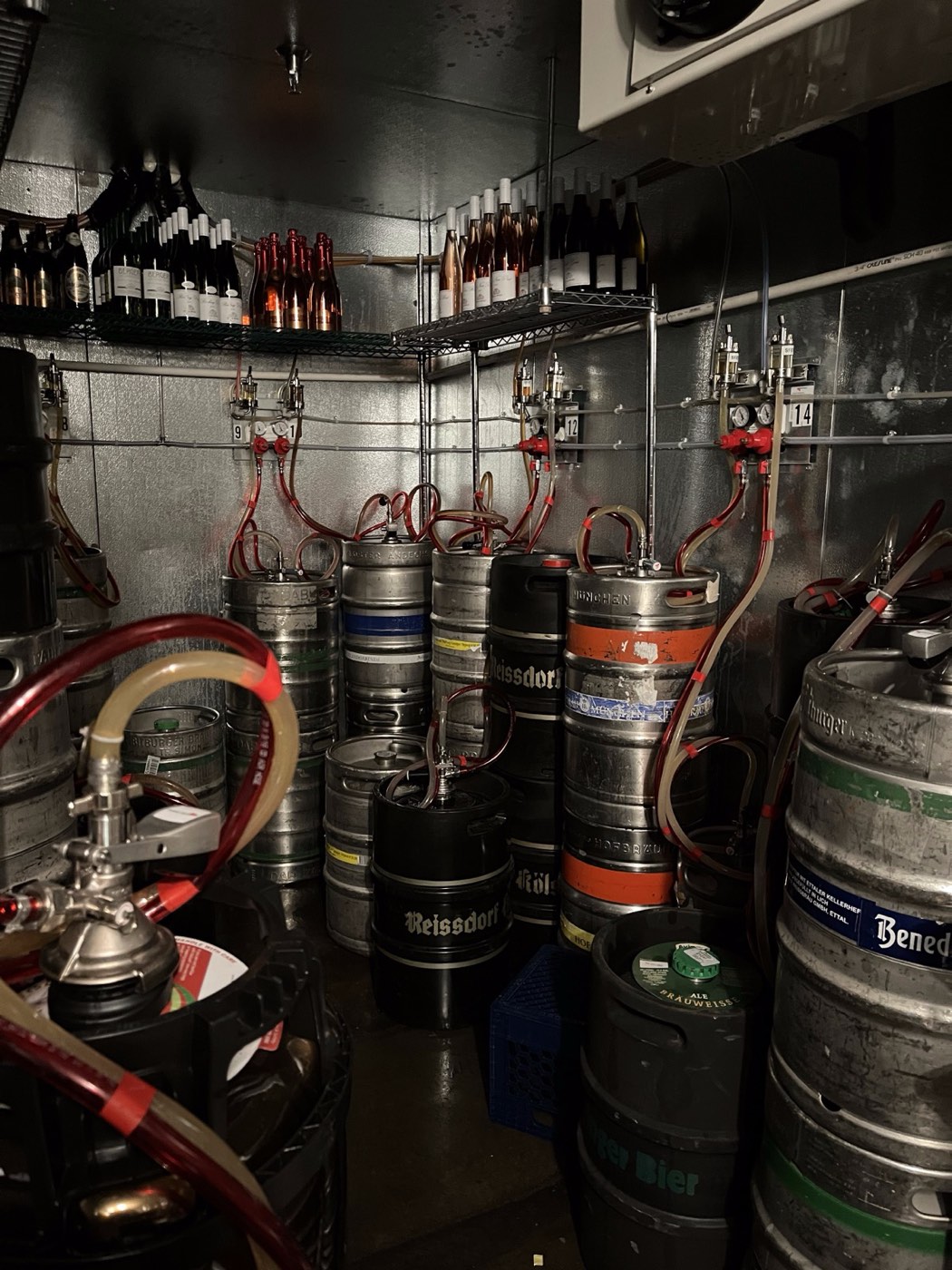
The fix isn't a cleaning schedule on paper. It's a cleaning schedule actually executed — every 14 days, every line, every faucet disassembled and scrubbed, every coupler inspected. That's what the Brewers Association Draught Beer Quality Manual calls for, and that's what our professional beer line cleaning service delivers on every visit.
Why Renny's Bi-Weekly Cleaning Plan Solves the Foam Problem
We've been doing this in Central Oregon for over 20 years. Brandt came up through 10 Barrel, GoodLife, and Boneyard. Kyle has been designing and installing custom draft systems across the U.S. since 2012. Between us, we've cleaned and dialed in systems for Deschutes Brewery, 10 Barrel Brewing, Boneyard Brewing, Crux Fermentation Project, Sunriver Brewing, GoodLife Brewing, Worthy Brewing, Cascade Lakes, Bend Brewing Company, Sunriver Resort, Mt. Bachelor, and 50+ others across the region.
Our 5.0 Google rating isn't from reviews of "nice guys who showed up." It's from bar owners who watched their keg yield jump from 75% to 90%+ after one walkthrough and a few visits.
Here's what working with us actually looks like:
- Free Draft System Profit Assessment — 30-minute walkthrough. We measure your faucet temps, check your pressures, time a pour, inspect your lines and couplers, and hand you a custom ROI report on the spot showing exactly how much yield you're losing.
- Bi-weekly cleaning plan — every 14 days, on schedule, full caustic recirculation, faucet disassembly, coupler inspection, pressure check, temperature verification.
- Quarterly acid cleaning — phosphoric acid wash to remove beerstone (mineral deposits caustic can't break down).
- Semi-annual deep clean — full FOB and coupler disassembly, o-ring replacement, line condition assessment.
When we control both the install and the maintenance schedule, we guarantee 90%+ keg yield. If your system isn't hitting it, we keep working until it does. That's the deal.
The ROI: What Stopping Foamy Beer Is Actually Worth
Let's run your numbers. (Or run them yourself — we built a Draft Beer Profit Calculator that takes your kegs-per-week and price-per-pint and shows you the gap.)
A typical poor-yield system runs at 75% keg yield — meaning 25% of every keg is foam, free top-offs, and dumped pours. At a $175 keg cost and a 15oz pour at $6.50, that's $468.30 of profit per keg.
A Renny's-maintained system at 90%+ keg yield turns the same keg into $591.80 of profit per keg. That's $123.50 in incremental profit per keg — money you should be keeping.
Our entire bi-weekly cleaning plan costs less per month than the profit recovered from a single keg. The math is decided. The only question is whether you're collecting the money or pouring it on the floor.
Why Bend Bars Specifically Need This Right
Central Oregon's craft beer scene runs hot. With 30+ breweries and taprooms in the Bend area alone — and tourists pouring in from Galveston Avenue, the Old Mill District, Sunriver, Sisters, and beyond — your draft system is on display every single night. A foamy pour on a busy Friday isn't just lost profit. It's a tourist who never comes back, a Yelp review that hurts you for years, and a craft beer city's reputation everyone in the industry shares.
The brewers we've worked with — at Crux, Deschutes, 10 Barrel, GoodLife, Sunriver, Worthy, Boneyard — they obsess over carbonation, water chemistry, hop schedule, and yeast management. All that work falls apart at your faucet if your draft system is foaming. We protect their work. And we protect your margins.
That's why Brewer Approved establishments on our Renny's Ale Trail get a designation no one else in the region offers. Travelers know if a bar is on the trail, the beer is poured the way the brewer intended.
Frequently Asked Questions About Foamy Draft Beer
Q: Why is my draft beer foamy all of a sudden?
A: A sudden change in pour quality almost always points to one variable shifting — usually temperature (walk-in compressor cycling, glycol bath drift, a warm trunk line) or a recently changed keg with different carbonation specs. Take the beer temp at the faucet first. If it reads above 38°F, you've found your foam.
Q: Can high CO2 pressure cause foamy beer?
A: Yes — both too high and too low cause foam. Too high over-carbonates the beer over time, so it explodes when it hits the glass. Too low lets CO2 break out of solution inside the line, so beer fizzes before it ever pours. Direct-draw runs at 12–14 psi straight CO2 on a beer held at 36–38°F. Long-draw runs on a CO2/N2 blend at a pressure that varies based on the specific blend, line length, and elevation — there's no universal psi number for blended gas, which is why getting it dialed in takes a real walkthrough.
Q: How often should I clean my beer lines to stop foam?
A: Every 14 days, no exceptions. That's the Brewers Association standard, and it's the only schedule that prevents biofilm buildup from disrupting beer flow. Use a 2% caustic solution at 80–110°F recirculated through the lines for at least 15 minutes — not gravity-fed, not a hand pump, not just hot water.
Q: What temperature should draft beer be served at?
A: Beer should be kept at 36–38°F all the way through the system — at the keg, in the trunk line, and at the faucet. If it warms up between any of those points, you'll get foam. Take the reading at the faucet, not at the walk-in door — that's where the actual problem lives.
Q: Does Bend's elevation affect draft beer pressure settings?
A: Yes. At Bend's ~3,600-foot elevation, you need approximately 2 psi of correction vs. sea level for the same beer style. Most generic spec sheets are written for sea level, which is why imported equipment specs often fail in Central Oregon without adjustment.
Q: How do I find a professional beer line cleaning service in Bend, Oregon?
A: Renny's Draft Solutions is Central Oregon's brewer-owned draft system specialist — bi-weekly and monthly line cleaning plans, 5.0 Google rating, 50+ named clients including Deschutes, 10 Barrel, Crux, GoodLife, and Sunriver Brewing.
Book a free walkthrough here.
Stop Pouring Money on the Floor
If your beer is foaming, your system is telling you something. Listen to it.
Book a Free Draft System Profit Assessment. We'll come walk your bar — Bend, Redmond, Sisters, Sunriver, La Pine, Prineville, anywhere in Central Oregon — measure everything, identify exactly what's causing your foam, and hand you a written ROI report showing what it's costing you. No obligation. No pitch. Just numbers.
Your call.
– Renny, Renny's Draft Solutions
Renny's Draft Solutions serves Bend, Redmond, Sisters, Sunriver, and the greater Central Oregon region. Custom draft system design and installation, bi-weekly and monthly line cleaning plans, system upgrades and optimization. 5.0 ⭐⭐⭐⭐⭐ on Google. 50+ Central Oregon clients trust Renny's with their draft beer.
Book a Free Walkthrough.
Related Posts
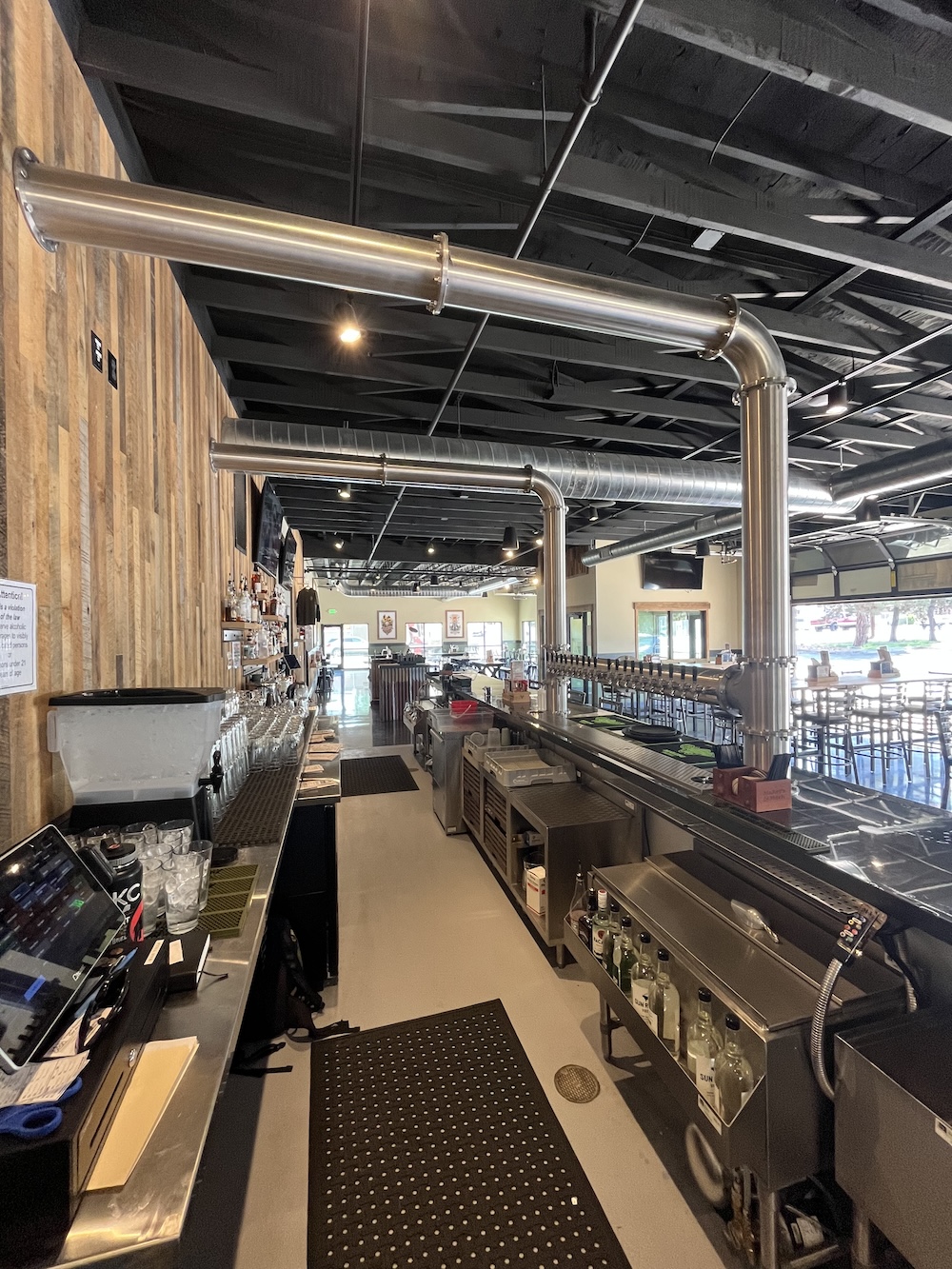
Draft System Installation in Bend, Oregon: Why Renny's Draft Solutions Is Your Best Investment
.jpeg)
Taproom Draft Beer System Installation in Central Oregon
Essential Tap System Checks for Quality Beer
Want more tips like this? Get our free guide.
Download The 5 Ways Bars Lose Money on Draft Beer — a free resource used by 50+ Central Oregon bars and breweries.