
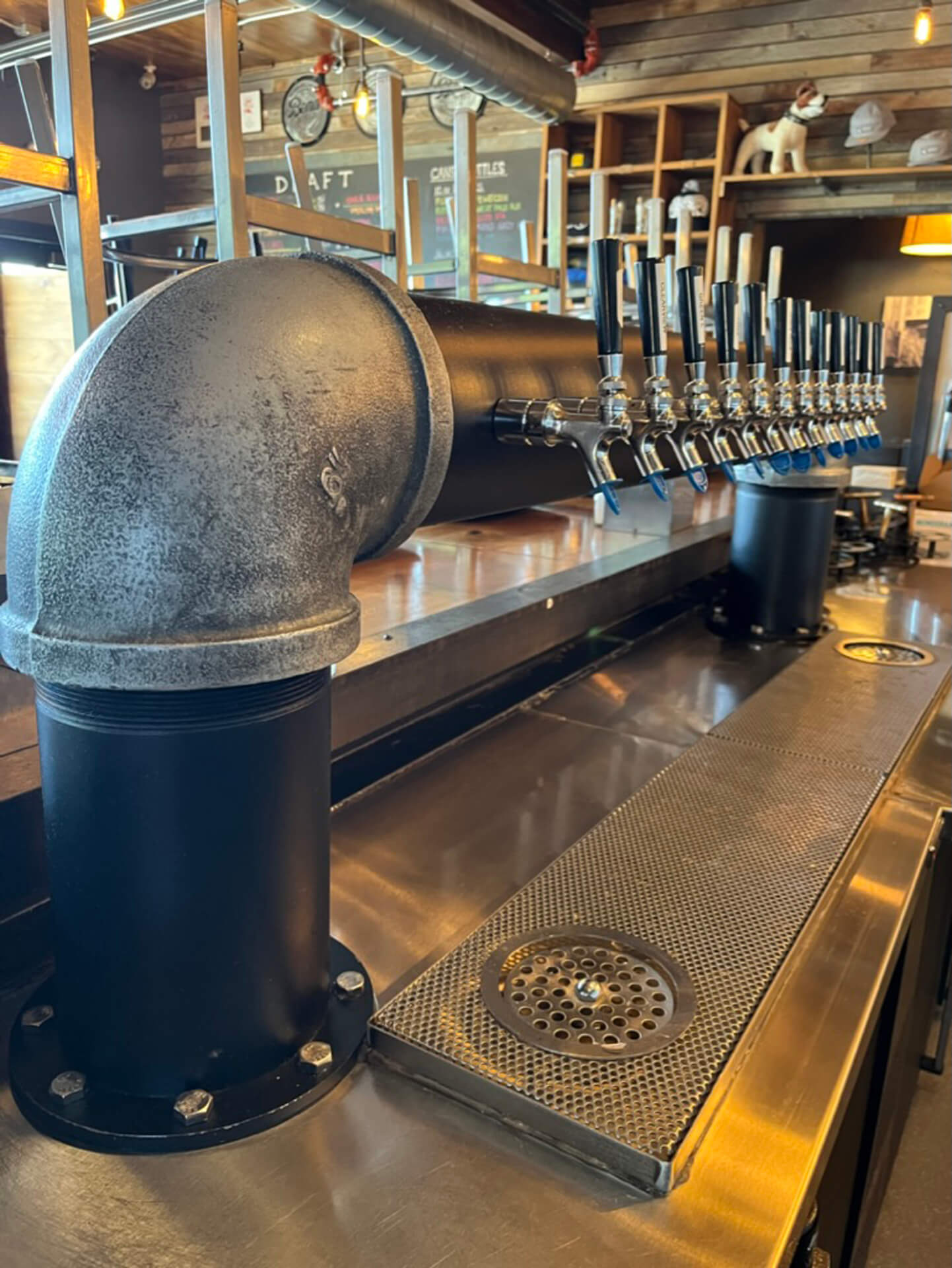
Quick Summary: A basic keg setup is simple and cost-effective for small venues with short lines and low volume. A full draft system delivers better pour quality, consistency, and scalability for busy, high-volume locations. Installation complexity and maintenance both increase with a full system, but so does keg yield and margin. Choose based on your venue's size, layout, and traffic.
A basic keg setup works well for a small bar with short lines and low volume. But if you need steady pours, faster service, and better yield, a full draft system usually wins. This guide compares the two on installation, upkeep, consistency, and profit, the way operators actually size a system against venue traffic and layout.
Keg System vs Draft Beer System: At a Glance
| Factor | Keg system | Draft beer system |
|---|---|---|
| Installation complexity | Lower, simpler layout | Higher, custom-designed |
| Best for | Small venues, temporary service, low-volume pours | Busy bars, breweries, restaurants, multi-tap venues |
| Yield and consistency | Adequate for short runs, more sensitive to handling | Higher, engineered for balanced pours |
| Maintenance needs | Basic cleaning and monitoring | Scheduled cleaning and system checks |
| Scalability | Limited for long runs or heavy traffic | Strong for expansion and long-draw layouts |
How the Two Compare
Keg system
A keg system is a basic keg-to-tap setup built for short runs and lighter service. It fits small bars, pop-ups, catering, and low-volume spots that want lower install complexity and simple upkeep.
Draft beer system
A draft beer system is a custom commercial setup built for better pour quality, steadier flow, and stronger keg yield. It suits busy venues, long-draw layouts, and multi-tap operations where the system can be designed for growth.
Installation Complexity and Space Fit
When a simpler setup is enough
A basic keg setup works when the cooler sits close to the tap wall, line runs stay short, and you only need a few handles. The Brewers Association draught manual separates direct-draw from long-draw systems for exactly this reason.
When layout demands a full system
Once your kegs sit far from the bar, or faucets need to cross walls, ceilings, or another room, complexity rises fast. The Brewers Association notes that long-draw systems need added design for cooling, balance, and resistance in its retailer guide.
Tight floorplans save money. Long runs need professional planning.
Yield, Pour Quality, and Revenue Impact
Waste shows up fast in service. You see it as first-pour foam, overfills, slow pours, and beer dumped after warm lines or bad balance. The Brewers Association notes that poor system design, dirty lines, and bad pouring all hurt draught quality and consistency in the glass, in its Draught Beer Quality Manual.
Higher-volume venues feel this first, because small losses stack up across every shift. A few ounces lost per pour becomes real keg shrink by weekend close. More traffic also means warm faucets, rushed staff, and less time to correct problems as they happen.
Better draft balance protects both pour quality and margin.
Maintenance, Cleaning, and Staff Workload
Low-maintenance does not mean no maintenance. A simple keg setup has fewer parts, so staff can spot leaks and swap kegs quickly. A full draft system needs tighter cleaning, faucet care, and line checks. The Brewers Association recommends a two-week line-cleaning cycle.
Busy venues should plan service, not guess at it. More pours mean more wear on couplers, FOBs, and glycol components. Miss the intervals and foam, off-flavors, and waste show up fast. If your team is already stretched, outside service usually costs less than lost beer and staff time.
Which Should You Choose for Your Venue?
Choose a keg system if you need simplicity first
Pick a keg system if you run short lines, low to moderate volume, and a small staff. It costs less up front and is easier to train on. That makes sense for pop-ups, small restaurants, and mobile service.
Choose a draft beer system if you need performance first
Pick a full draft system if you need steady pours, longer line runs, and tighter quality control. The Brewers Association ties draught quality directly to system design, gas balance, and cleaning. If foam, waste, or warm first pours are cutting into profit, it is time to go professional.
Need the right setup for your venue? Talk to Renny's Draft Solutions about custom install, cleaning, and maintenance that protects keg yield, pour quality, and profit.
Frequently Asked Questions
How do I choose a draft beer system?
Match the system to your volume, line length, staff skill, and menu size. Short draws and low traffic often fit direct-draw keg setups. Longer runs, higher volume, and tighter yield control usually justify a full draft system.
Is a basic keg system cheaper to run?
Up front, yes. Long term, not always. Foaming, waste, warm pours, and staff workarounds can raise costs quickly once your venue gets busy.
When should I upgrade to a professional draft system?
Upgrade when you add taps, move kegs farther from the bar, or start losing margin to foam and slow service. That is usually the tipping point.
Conclusion
Pick a keg system for short runs and lower volume. Choose a full draft system for distance, speed, and consistency. System design, gas balance, and cleaning are what protect beer quality and profit.