Quick Summary: Proper beer line service is what keeps foamy pours and flavor problems off your tap wall. Cleaning should happen every 14 days, adjusted for tap turnover. Verifying cleaning logs, auditing the full pour path, and running sensory checks after service are what separate real maintenance from a box-ticking visit. The right service model depends on your volume and how closely you can supervise the work.
If your busiest tap turns foamy after a packed Saturday, blame the schedule before the keg. Most pour problems start with uneven service, skipped cleanings, or no clear verification process. This guide covers how to set a practical routine by venue type and turnover, then how to check that the work actually got done.
Step 1: Match Service Frequency to Tap Turnover
Start with a simple rule. The Brewers Association calls for draught systems to be cleaned at least every 14 days in its quality manual. Use that as your baseline, then tighten the schedule for slow lines. A tap that empties kegs fast usually stays fresher between visits. A tap that sits for days does not.
Some venues need more attention even at the same pour volume. Low-use lines still hold beer, and they can foul between pours as industry guidance explains.
Slow seasonal taps, nitro lines, and long-draw runs need closer checks than your fast movers.
Step 2: Audit What Reliable Service Should Include
Confirm the line-cleaning cycle is complete. Ask for proof, not promises. The Brewers Association specifies that routine draught cleaning should use recirculation, a 2 to 3 percent caustic solution, and happen at least every 14 days, with a full rinse afterward. Your checklist should confirm all of the following:
- Date and time of the last cleaning, recorded per line
- Cleaning method used, and confirmation it was recirculated rather than static-soaked
- Caustic concentration and contact time
- Post-clean rinse, verified to run clear
- Which lines were skipped, and why
If your vendor cannot show the log, treat the cleaning as incomplete.
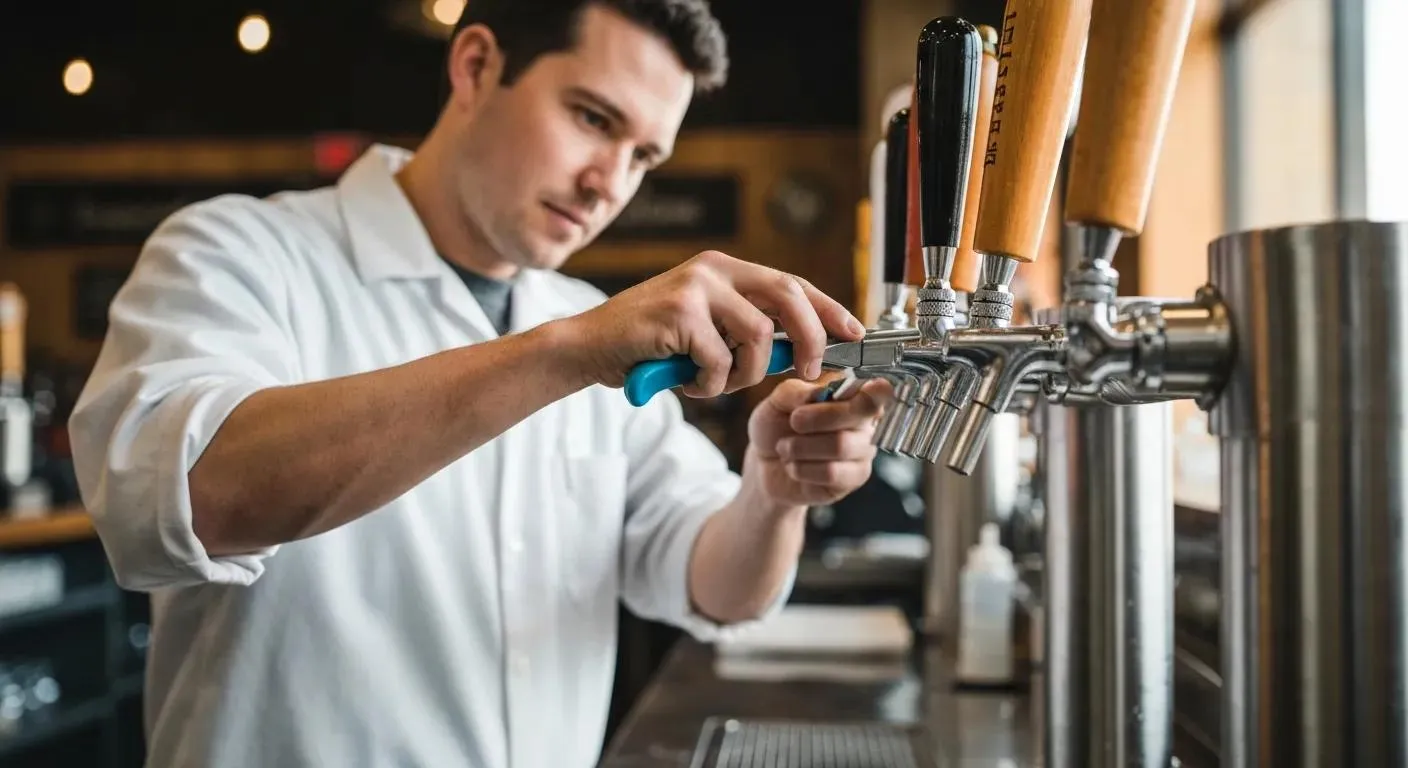
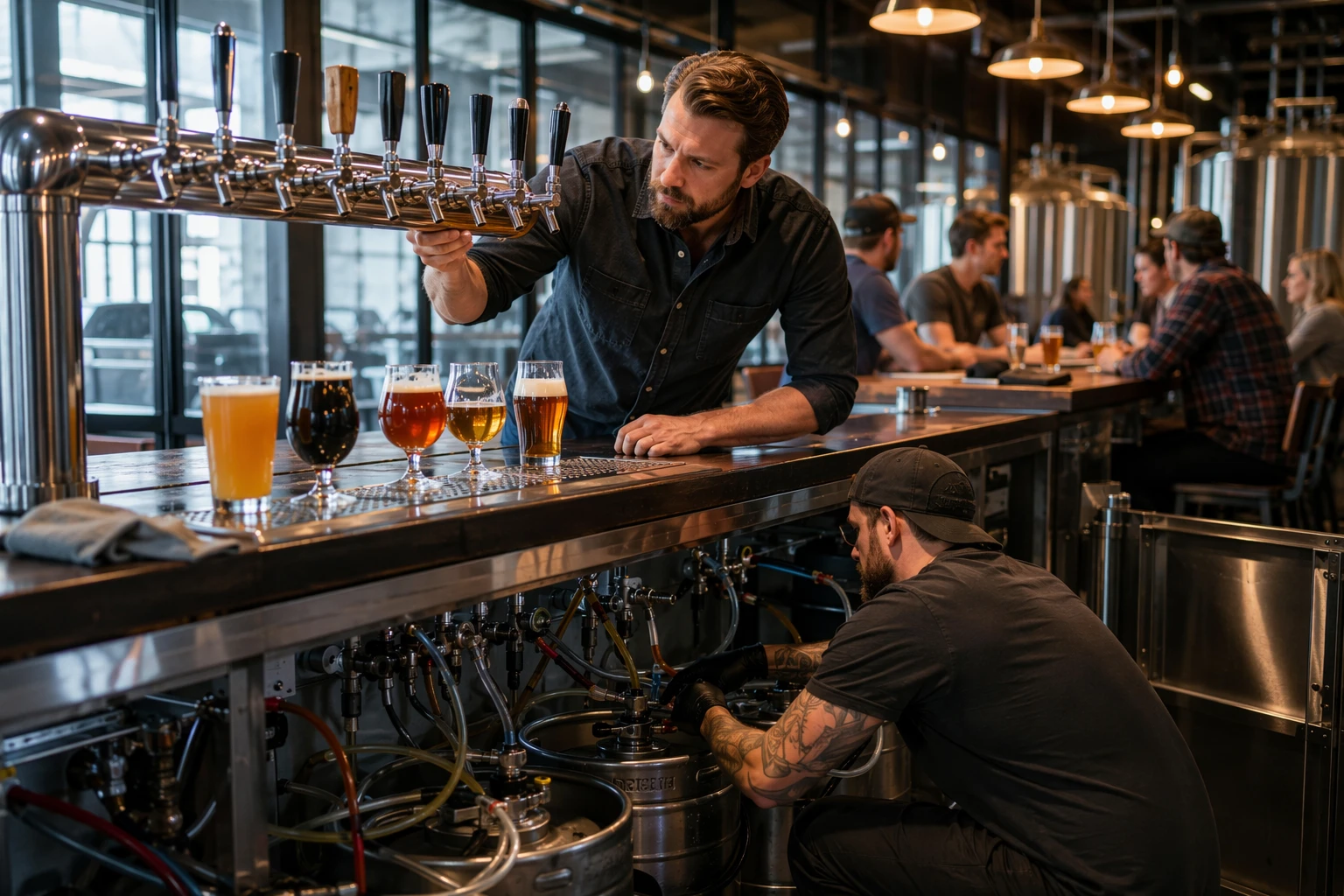
Check the service point components, not just the lines. Good service covers the whole pour path. Brewers Association training calls for hand-cleaning faucets, couplers, and FOBs, plus periodic acid cleaning to address mineral buildup. Use a quick audit against each component:
| Component | What to verify | Red flag |
|---|---|---|
| Faucet | Fully disassembled and brushed | Sticky or stiff handle |
| Coupler | Clean body and intact seals | Dark residue around the probe |
| FOB | Purged and serviced | Air in the line after a keg change |
Step 3: Verify Performance After Service
Use simple pour checks right after cleaning. The Brewers Association recommends sensory evaluation, visual inspection, and ATP testing where the situation warrants it.
A clean line can still pour badly if temperature, gas, or glasswashing is wrong.
Ask your service partner to log results, not just cleaning dates. A date tells you someone showed up. A result tells you the system is actually pouring right.
Step 4: Choose the Best Service Model for Your Operation
Pick the model you can actually manage and verify. The Brewers Association notes that distributors may clean lines in some states, while other states require in-house work or an outside provider, so local rules matter.
| Service model | Best fit | Main risk |
|---|---|---|
| In-house | Small systems, trained staff, tight daily oversight | Missed steps and weak record-keeping |
| Distributor | Venues with simple needs and bundled service | Less control over timing and thoroughness |
| Third-party specialist | High-volume bars, long-draw systems, multi-product setups | Higher direct cost |
Whichever you pick, use this quick check to hold it to standard:
- Can you see a cleaning log covering the last 14 days?
- Does the log record every line, or only the busy ones?
- Is someone accountable when a pour problem appears mid-cycle?
- Does the provider adjust frequency based on results, or run the same route regardless?
Need cleaner pours and fewer draft problems? Book service with Renny's Draft Solutions to set the right schedule and keep every line pouring right.
Frequently Asked Questions
What is the best line cleaning schedule?
The best schedule fits your turnover, line length, beer mix, and storage temperatures. Most bars need cleaning at least every two weeks. High-volume or very low-turnover systems may need weekly service.
How do I know my current schedule is not enough?
Watch for foaming, flat taste, sour notes, slow pours, or flavor that changes between kegs. If these appear before your next planned cleaning, your schedule is too wide. Track waste, first-pour quality, and customer complaints.
Should every draft line follow the same schedule?
No. Fast-moving lagers, slow seasonal taps, nitro lines, and guest handles often need different timing. Group lines by product type and turnover, clean the problem lines sooner, and review logs monthly so the schedule stays driven by results.
Conclusion
Reliable pour quality comes down to one rule: match cleaning frequency to system risk, track the results, and verify the work. Keep a visible cleaning log on a two-week cycle and most draft problems never reach your customers.