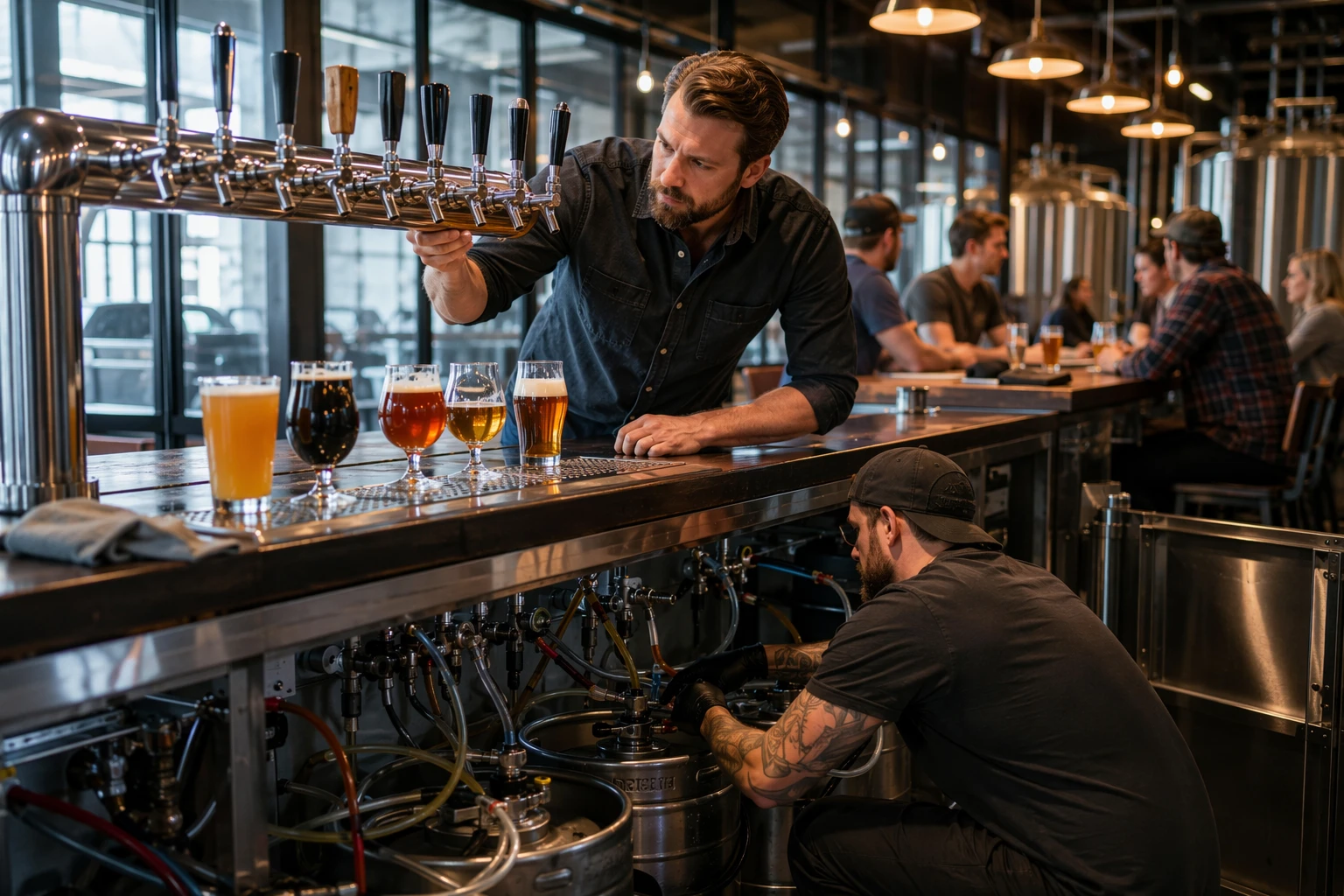
The short answer: Most Central Oregon bars, taprooms, and restaurants invest roughly $200–$600 a month for professional, on-schedule draft beer line cleaning. Larger multi-tap operations on a true 14-day schedule run $900–$2,000+. Where you land comes down to tap count, system type, cleaning frequency, and — the part that actually decides the number — what's included in the visit.
Nobody in this business wants to talk price.
Search "draft beer line cleaning cost" and you'll get a wall of pages that dance around the number and tell you to call for a quote. Meanwhile the only real figures floating around Central Oregon are rock-bottom per-visit prices for small tap counts — numbers that sound like a deal right up until you understand what you're not getting.
So we'll just tell you. Here's what professional draft line cleaning actually costs around Bend, what moves that number up and down, and why the cheapest cleaning on the market is almost always the most expensive line item in your keg room.
What draft beer line cleaning costs in Central Oregon
Four things set your number:
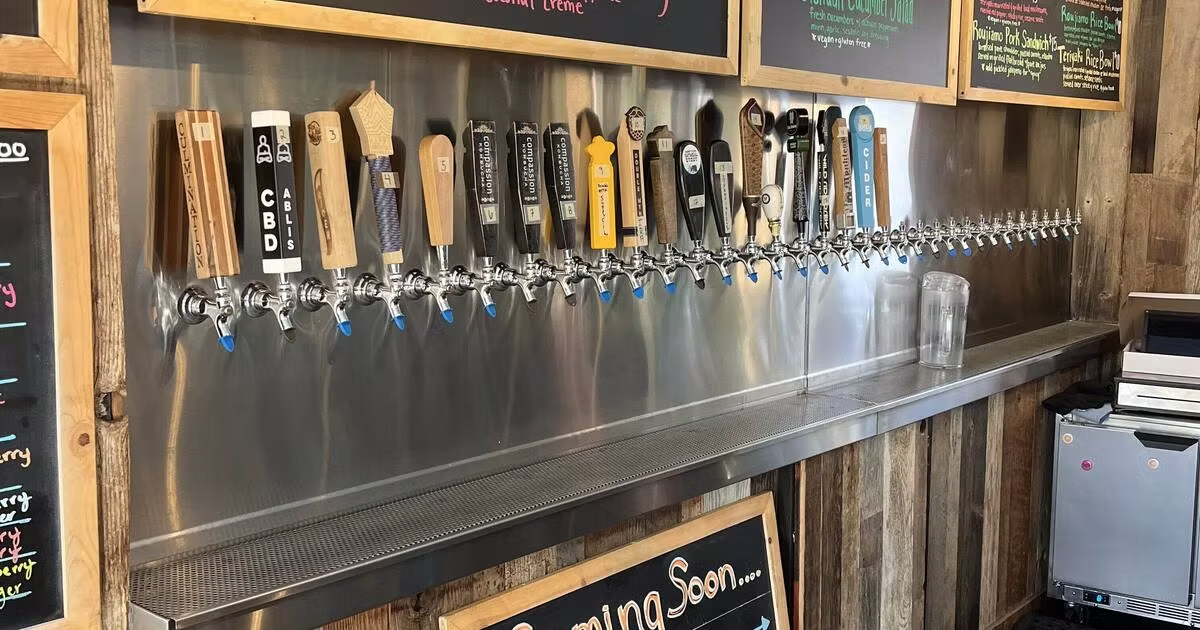
- How many taps you run. More lines, more labor. A 6-tap kitchen and a 30-tap taproom are not the same job, and nobody should price them like they are.
- Your system type. A direct-draw cooler is quick work. A long-draw glycol system with 100+ feet of trunk line takes real time to clean correctly — there's more line, more contact time, and more that can go wrong.
- How often. The Brewers Association standard is every 14 days, maximum. That's not a suggestion or an upsell; it's the interval past which contamination starts winning. Monthly costs less per year and delivers less beer.
- What's actually in the visit. This is the big one, and it's where "cheap" and "professional" stop meaning the same thing.
Put together, that's the $200–$600 range for most Central Oregon venues, and $900–$2,000+ for high-tap-count operations running a proper bi-weekly schedule. A 42-tap house on 14-day service is a fundamentally different job than an 8-tap restaurant on monthly, and the invoice should say so.
Why the cheapest cleaning costs you the most
Here's the trap. Two services quote you. One is a lot cheaper. You go with cheap. Feels smart.
Except cheap usually means someone runs a jug of solution through your lines, wipes down the faucets, and leaves. That's not a cleaning — that's a rinse. It never reaches the beerstone, the biofilm, or the yeast building up where you can't see it. And a dirty line isn't a cosmetic problem. It costs you real money in three directions at once.
Foam. Warm, restricted, or gunked-up lines foam. Every foamy pour is a short pour, a top-off, or a dump — beer you already bought and can't sell. Cleanliness is one of the three root causes of yield loss, and the gap between a 75% yield system and a 90% system is approximately $131.85 in profit per half-barrel keg. Line cleaning is the cheapest lever you have on that number.
Off-flavors. Bacteria in a neglected line turns good beer sour, buttery, or vinegary. Here's the part that stings: your guest usually doesn't complain. They just don't order a second one, and they remember. That's your reputation pouring through a dirty faucet — and it's your brewery partners' reputation too.
Emergency calls. Skip the schedule and you don't save money, you defer it. You defer it into an after-hours "why is every tap foaming on a Friday night" call that costs more than a year of doing it right.
Run the math on your own bar
Take approximately $131.85 per keg and multiply it by what you actually move:
Those are half-barrel figures at a 15-oz pour. If you run sixtels, the per-keg number is smaller — but the percentage you're losing is identical, and so is the fix.
Now put your cleaning invoice next to that column. For a busy bar, a full month of professional service costs less than the beer a foaming system pours down the drain in a single week. That's the real comparison — not one quote against another quote. You can run your own numbers in our draft beer profit calculator if you want it in front of you.

What a real cleaning includes — and what to ask before you hire anyone
Everything you're paying for happens back here — not at the faucet.
If you're comparing quotes, stop comparing prices and start comparing what's in the visit. Renny's follows the Brewers Association Draught Beer Quality Manual standard on every stop:
- Caustic recirculation at proper concentration (2–3%) and temperature (80–110°F), pumped through the lines for full contact time — not gravity-fed, not rushed
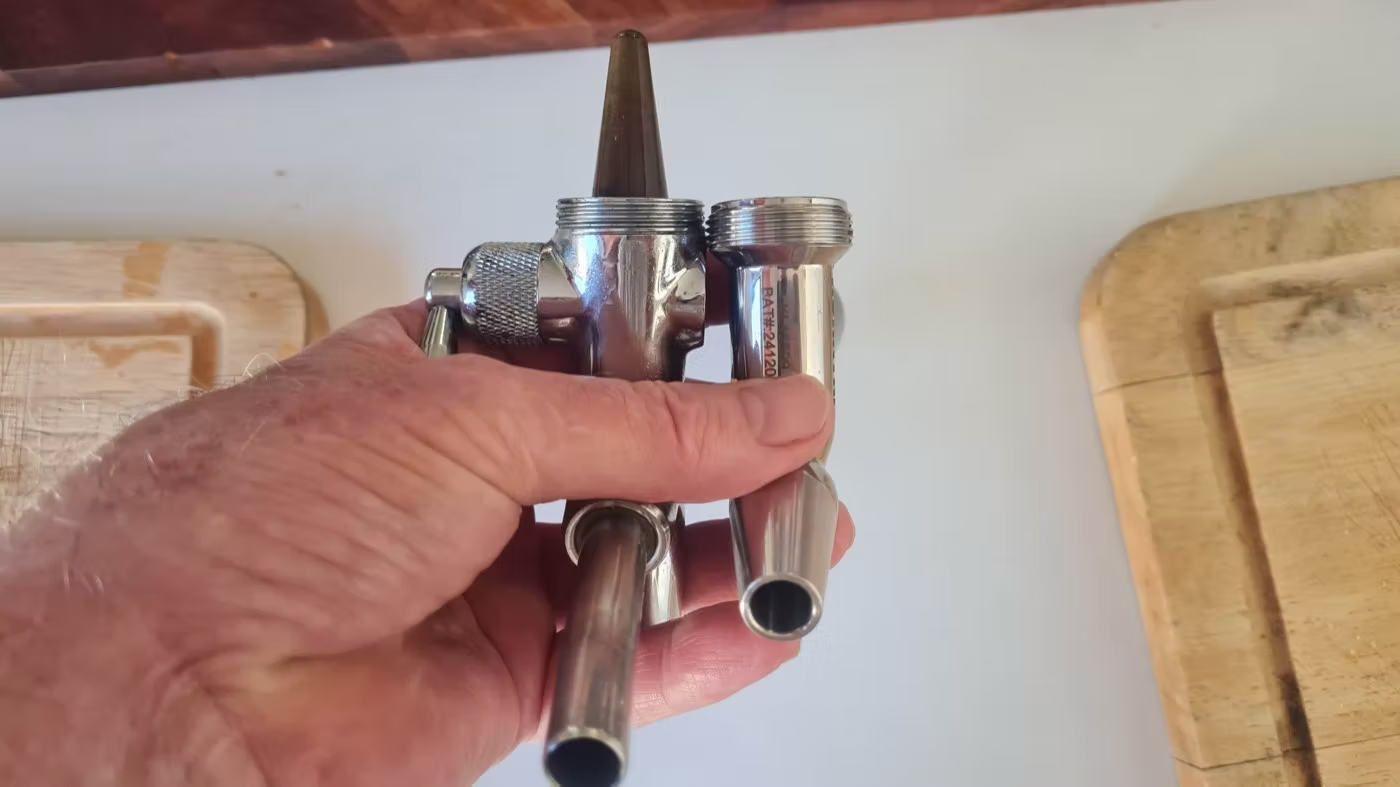
- Full faucet disassembly — every faucet comes apart, gets cleaned inside and out, and goes back together
- System pressure and temperature check — because a clean line on a mis-balanced system still pours foam
- Quarterly acid cleaning to strip the beerstone that caustic chemically cannot touch
- Semi-annual hardware teardown — couplers and FOBs disassembled and cleaned
- A written service report — you should know exactly what was done and what we found
Ask any service you're considering two questions: Do you disassemble the faucets every visit? Do you recirculate with a pump, or gravity-feed? If the answers are no and gravity, you're paying for a rinse, and the price difference just explained itself.
One more thing worth knowing: how often your lines get cleaned matters as much as how well. A flawless cleaning every 30 days still leaves two weeks of contamination doing its work.
Why Central Oregon is different
Bend sits at roughly 3,623 feet. That elevation changes your applied pressure math — about +2 psi compared to sea level — and a service tech who doesn't account for it will hand you a "clean" system that still foams.
Then there's the standard. This is a town where your guests have toured breweries, where half your regulars can name a diacetyl problem before you can, and where your draft list sits next to some of the best beer in America. A dirty line here isn't a maintenance issue. It's a credibility issue.
That's the room we work in. Renny's is brewer-owned and Bend-based — Brandt came up through 10 Barrel, GoodLife, and Boneyard, and Kyle has spent 15+ years designing and installing draft systems, specializing in keg yield. Our client list is the reference check: Sunriver Brewing, Van Henion Brewing, Worthy Brewing, Bend Brewing Company, 10 Barrel Brewing, Initiative Brewing, Sunriver Resort, and 100+ more across Central Oregon. We hold a 5.0 Google rating from 75+ five-star reviews.
The guarantee
On systems we install and maintain on our bi-weekly (14-day) cleaning plan, we guarantee 90%+ keg yield. If at any time the system isn't operating at 90%, we keep working until it is. When we control both the install and the maintenance schedule, we'll stand behind the outcome.
On a system we didn't install or one running a longer interval, we won't pretend to guarantee a number we don't fully control — but we'll do everything possible to maximize your yield, and we'll tell you straight what's holding it back. That usually starts with a properly balanced system, and sometimes it starts with finding out why your beer is foaming in the first place.
What it'll cost you — the honest way to find out
Your number depends on your taps, your system, and your schedule. Any price we quoted you sight-unseen would be a guess, and you deserve better than a guess.
Here's the no-risk way to get the real one: book a free Draft System Profit Assessment. Thirty minutes, on-site. We assess your system, identify where your yield is going, and hand you a custom ROI report showing exactly what you're leaving on the table — plus a straight number on what a proper cleaning schedule runs for your build. No obligation, no pitch.